On This Page
- Charged With Arson in Colorado Springs?
- The Four Degrees of Arson in Colorado
- First Degree Arson
- Second Degree Arson
- Third Degree Arson
- Fourth Degree Arson
- Wildfire, Fire Bans, and Recreational Fires
- How Arson Cases Are Investigated
- How Arson Charges Are Defended
- Consequences Beyond the Sentence
- Working With a Colorado Springs Arson Lawyer
- Frequently Asked Questions
- Sources
Charged With Arson in Colorado Springs?
Arson charges cover a wider range of conduct than most people realize. They include deliberately burning a building, but also a campfire that escapes during a fire ban, a fire set to collect insurance, burning a former partner's belongings, and fireworks that damage a neighbor's property. In the Pikes Peak region, where wildfire risk is high, fire-related cases are taken very seriously.
Colorado divides arson into four degrees. The level depends on what was burned, whether anyone was endangered, whether the purpose was fraud, and the value of the damage. Some arson charges are petty offenses, while others are serious felonies with long prison terms.
This page explains each degree of arson, the penalties, how fire investigations work, and how arson charges are defended in El Paso County and the surrounding counties.
What to Do After an Arson Accusation
- Do not give a statement to police, fire investigators, or insurance adjusters without a lawyer. Fire investigators often interview people before charges are filed.
- Be careful with insurance claims. Statements to your insurer can be shared with investigators, and an insurer may deny a claim while the investigation is pending.
- Preserve evidence such as photos, receipts, and electrical or appliance repair records.
- Do not return to the scene or remove items without permission. It can be treated as tampering with evidence.
The Four Degrees of Arson in Colorado
| Degree | Key Elements | Classification |
|---|---|---|
| First degree | Knowingly burning a building or occupied structure of another without consent | Class 3 felony for an occupied structure; class 4 felony for a building |
| Second degree | Knowingly burning other property of another without consent | Petty offense to class 2 felony, based on value |
| Third degree | Intentionally damaging any property by fire or explosives to defraud | Class 5 felony |
| Fourth degree | Knowingly or recklessly starting or maintaining a fire that endangers a person or another's building | Class 4 felony if a person is endangered; otherwise based on value |
First Degree Arson
Under C.R.S. 18-4-102, a person commits first degree arson by knowingly setting fire to, burning, or causing to be burned, or by using an explosive to damage or destroy, any building or occupied structure of another without consent.
- It is a class 3 felony, carrying 4 to 12 years in prison, when the arson is of an occupied structure.
- It is a class 4 felony, carrying 2 to 6 years in prison, when the arson is of a building that is not occupied.
- When explosives are used, the court must sentence the person under the crime of violence statute, which requires a prison sentence of at least the midpoint of the presumptive range.
An "occupied structure" generally includes places where people are present or where people are likely to be present, such as homes and apartments, even if no one was inside at the moment of the fire.
Second Degree Arson
Under C.R.S. 18-4-103, a person commits second degree arson by knowingly setting fire to, burning, or using an explosive to damage property of another, other than a building or occupied structure, without consent. Vehicles, personal belongings, fences, sheds that are not buildings, and crops all fall into this category.
| Value of Damage | Classification |
|---|---|
| Less than $300 | Petty offense |
| $300 to less than $1,000 | Class 2 misdemeanor |
| $1,000 to less than $2,000 | Class 1 misdemeanor |
| $2,000 to less than $5,000 | Class 6 felony |
| $5,000 to less than $20,000 | Class 5 felony |
| $20,000 to less than $100,000 | Class 4 felony |
| $100,000 to less than $1 million | Class 3 felony |
| $1 million or more | Class 2 felony |
Burning a former partner's car or belongings after a breakup is a common example, and these cases are often charged with a domestic violence designation.
Third Degree Arson
Under C.R.S. 18-4-104, a person commits third degree arson by intentionally damaging any property, including their own, by fire or explosives with intent to defraud. This is a class 5 felony, carrying 1 to 3 years in prison.
Third degree arson is the charge most often filed when investigators believe a person burned their own home, car, or business to collect insurance. These cases are typically paired with insurance fraud allegations and investigated jointly by fire investigators and the insurer.
Fourth Degree Arson
Under C.R.S. 18-4-105, a person commits fourth degree arson by knowingly or recklessly starting or maintaining a fire, or causing an explosion, on their own or another's property, and by doing so placing another person in danger of death or serious bodily injury, or placing another's building or occupied structure in danger of damage.
- If a person was endangered, it is a class 4 felony.
- If only property was endangered, the level depends on the value of the property involved, from a petty offense under $300 to a class 2 felony at $1 million or more, using the same value ranges as second degree arson.
Fourth degree arson does not require intent to burn anything. Recklessness is enough, which is why it is the most common charge after an accidental fire that spreads. The statute exempts a controlled agricultural burn conducted in a reasonably cautious manner that causes no injury.
Wildfire, Fire Bans, and Recreational Fires
El Paso County, Teller County, and the U.S. Forest Service in the Pike National Forest regularly impose fire restrictions during dry periods. Violating a fire ban is a separate offense under county ordinances and federal regulations, usually punished by fines.
When a fire started during a ban escapes and threatens homes or people, prosecutors may also charge fourth degree arson. The question is usually whether the person acted recklessly, meaning they consciously disregarded a substantial and unjustifiable risk. Evidence about the weather, the fire restrictions in effect, the precautions taken, and how the fire spread is central.
Fires that start on federal land, including national forest land west of Colorado Springs, can also lead to federal charges and claims for the cost of fighting the fire. Those costs can be very large.
Fireworks are a frequent source of fire cases in the summer. Fireworks that leave the ground or explode are illegal for consumers in Colorado, and fires caused by them can lead to arson charges as well as fireworks violations.
How Arson Cases Are Investigated
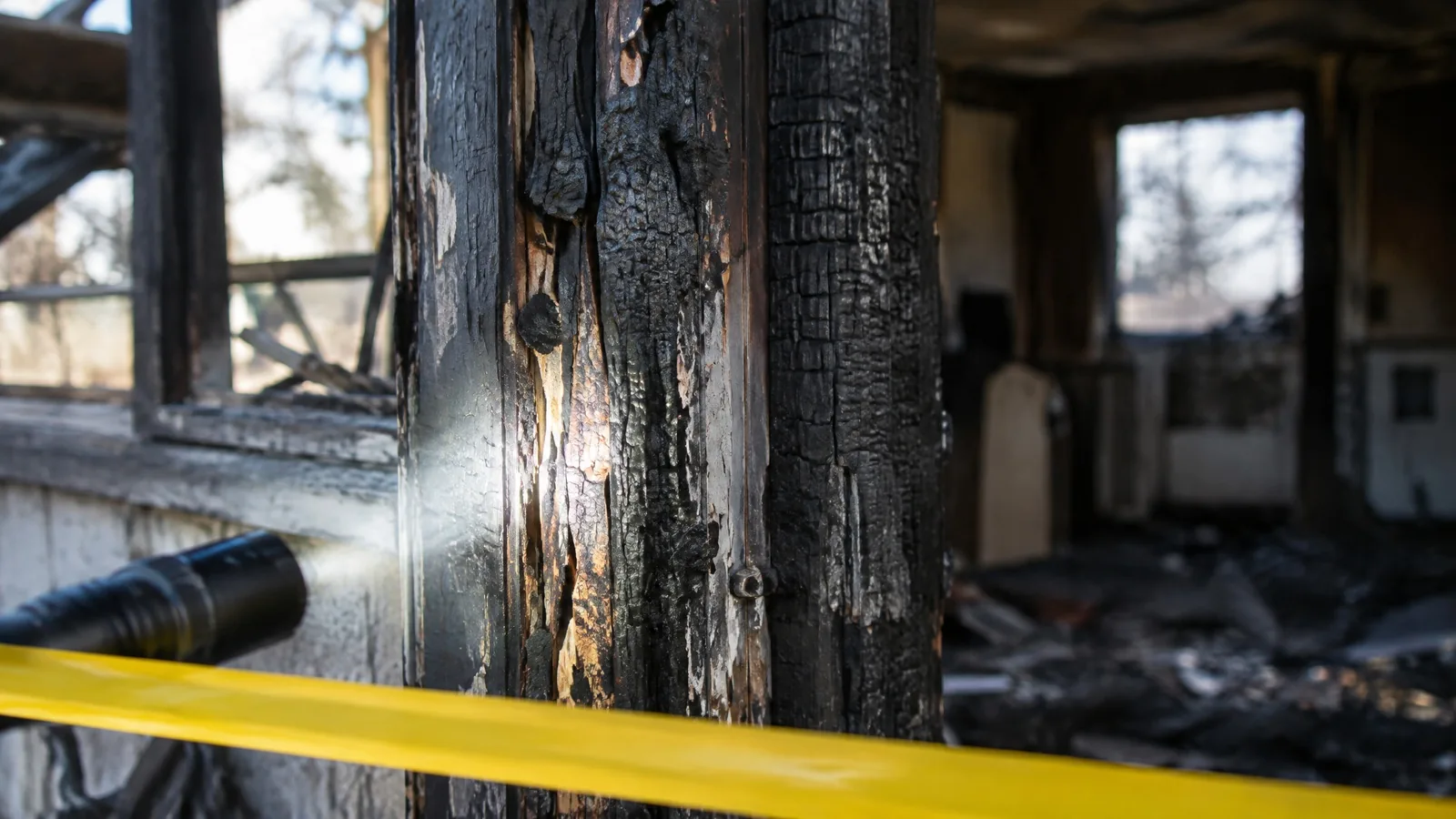
Arson cases depend heavily on fire science. Investigators from the Colorado Springs Fire Department, local fire districts, the El Paso County Sheriff's Office, and sometimes federal agencies examine the scene to determine where the fire started and what caused it.
- Origin and cause analysis. Investigators study burn patterns, damage, and witness accounts to identify the area where the fire began.
- Accelerant testing. Samples may be tested for gasoline or other ignitable liquids, sometimes after detection by a trained dog.
- Electrical and appliance evidence. Wiring, outlets, heaters, and appliances are examined to rule accidental causes in or out.
- Video and digital evidence. Doorbell cameras, phone location data, and purchase records are often used to place a person at the scene.
- Financial evidence. In suspected insurance fraud cases, investigators look at debts, insurance changes, and recent removal of valuables.
Fire investigation standards have changed significantly over the past few decades, and some older methods of interpreting burn patterns have been discredited. A careful review of the investigation, sometimes with an independent fire investigator, is often essential.
How Arson Charges Are Defended
No lawyer can promise a particular result, but these are the issues that come up most often.
Accidental Cause
Electrical faults, appliance failures, smoking materials, and unattended cooking cause many fires. If investigators did not properly rule out accidental causes, the conclusion that the fire was set intentionally may not hold up.
Mental State
First, second, and third degree arson require knowing or intentional conduct. Fourth degree requires at least recklessness. A person who used reasonable care, or who did not know the risk, may not meet those standards.
Identity
Fires destroy evidence. Even when a fire was set intentionally, the prosecution must prove who set it. Alibi evidence, phone location data, and video can be decisive.
Value and Classification
For second and fourth degree arson, the value of the property sets the charge level. Repair estimates and depreciation can change the classification significantly.
Consent
First and second degree arson require that the property belonged to another person and was burned without consent. Shared ownership and permission can be important in family and business cases.
Consequences Beyond the Sentence
- Restitution. Restitution can include property damage, firefighting costs, and losses to neighbors, and it can be very large.
- Firearms. A felony conviction generally ends the right to possess firearms under federal law, and arson convictions are specifically listed among the offenses that trigger Colorado's prohibition.
- Insurance. An arson investigation or conviction can lead to denial of an insurance claim and cancellation of coverage.
- Employment and housing. Arson convictions are viewed seriously by employers and landlords.
- Military members. Service members at Fort Carson, Peterson and Schriever Space Force Bases, and the Air Force Academy can face command action.
- Your record. Some lower-level arson convictions and dismissed cases can be sealed. See our record sealing page.
Working With a Colorado Springs Arson Lawyer
Attorney Michael W. Moran has been licensed to practice law in Colorado since 1995 and is a former municipal court judge. He represents people charged with every degree of arson, as well as related property and felony charges, in El Paso, Teller, Pueblo, and Fremont counties.
Arson investigations often begin long before charges are filed. A first meeting covers the fire, any statements already made, insurance issues, and how the investigation can be reviewed.
Criminal Defense Colorado Springs, P.C. offers free, confidential consultations.
Frequently Asked Questions
Is arson always a felony in Colorado?
No. First and third degree arson are always felonies, but second and fourth degree arson involving property worth less than $2,000 can be petty offenses or misdemeanors.
Can I be charged with arson for burning my own property?
Yes. Third degree arson covers burning your own property to defraud an insurer or anyone else. Fourth degree arson can apply when a fire on your own property endangers people or a neighbor's building.
Can an accidental fire lead to arson charges?
It can, if prosecutors believe the person acted recklessly, such as by starting a fire during a fire ban in high winds. A truly accidental fire, without recklessness, is not arson.
What is the sentence for first degree arson?
First degree arson of an occupied structure is a class 3 felony with a presumptive range of 4 to 12 years in prison. Arson of an unoccupied building is a class 4 felony with a range of 2 to 6 years. Using explosives triggers mandatory crime of violence sentencing.
Do I have to talk to fire investigators?
No. You can decline to answer questions without a lawyer. Statements to investigators and insurers are often the most important evidence in an arson case.
What happens if my campfire spreads during a fire ban?
You may face a fire ban citation and, if the fire endangered people or buildings, a fourth degree arson charge based on recklessness. You may also be asked to pay firefighting costs. The precautions you took and the conditions at the time are central to the defense.
Can a juvenile be charged with arson?
Yes. Juveniles can be charged with arson in juvenile court, and serious cases involving occupied structures can be transferred to adult court. See our juvenile defense page.