
On This Page
- Ignition Interlock in Colorado: The Short Answer
- How an Interlock Device Works
- Who Must Have an Interlock and for How Long
- Early Reinstatement After a BAC or Refusal Revocation
- Persistent Drunk Drivers and Refusals
- Living With an Interlock-Restricted License
- Violations That Extend or End the Restriction
- Costs and the Financial Assistance Program
- Approved Interlock Providers
- Out-of-State Drivers
- The June 1, 2027 Change Under HB26-1242
- Working With a Colorado Springs DUI and DMV Lawyer
- Frequently Asked Questions
- Sources
Ignition Interlock in Colorado: The Short Answer
In Colorado, an ignition interlock is how most drivers get back on the road after an alcohol-related license revocation. A driver 21 or older whose license was revoked for a BAC of 0.08 or more can usually apply for an interlock-restricted license right away. After a refusal, the wait is two months, and the interlock requirement is generally two years.
How long you keep the device depends on your BAC, whether you refused testing, and your prior record. A first offender under 0.15 has the shortest term and may qualify for early removal. Drivers with a BAC of 0.15 or more, a refusal, or repeat offenses face at least two years. A new law, HB26-1242, makes the interlock mandatory for most first offenders whose revocations begin on or after June 1, 2027.
How an Interlock Device Works
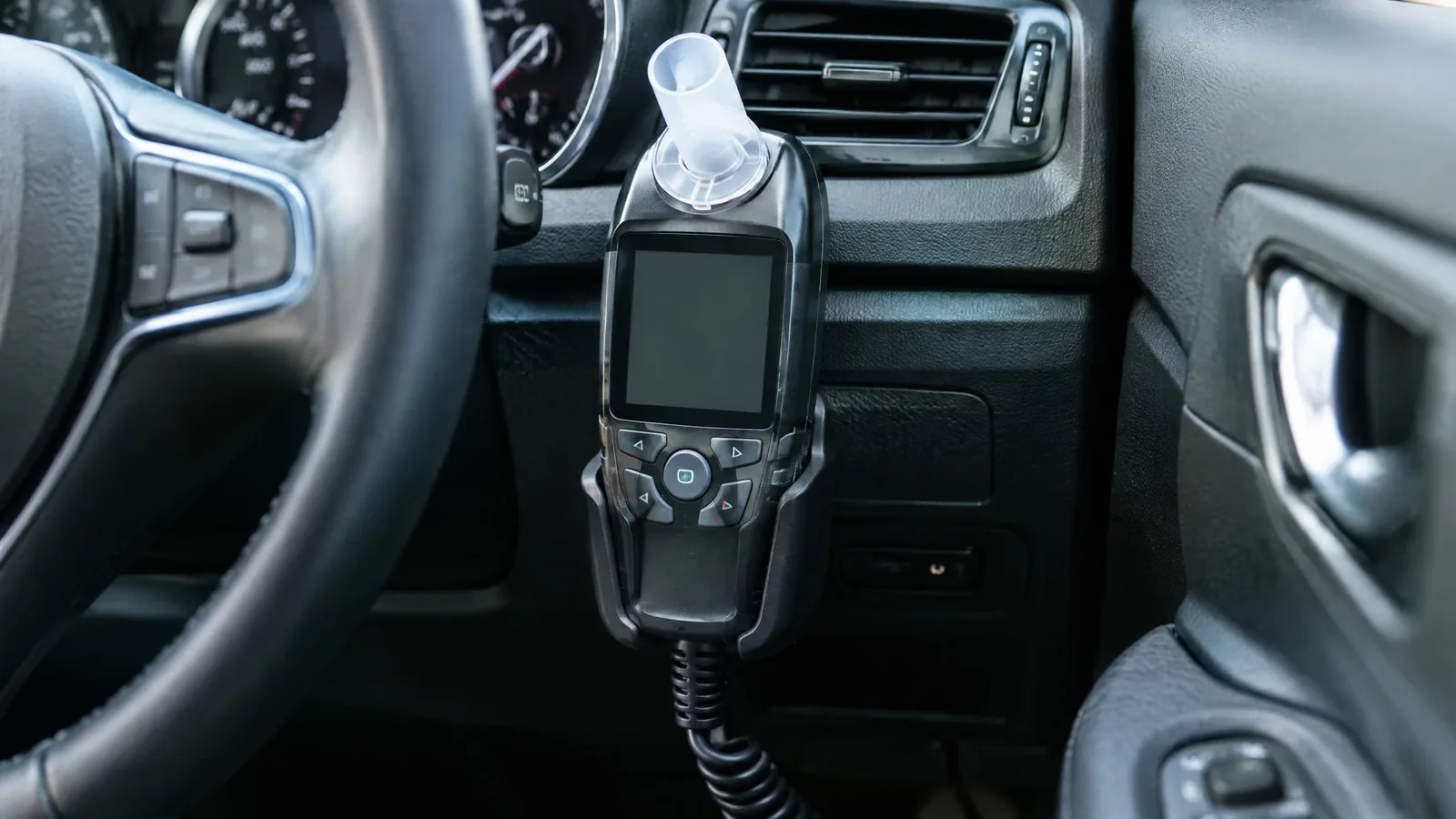
An ignition interlock is a breath-testing unit wired into your vehicle’s ignition. According to the Colorado Division of Motor Vehicles, you must give a breath sample before the engine will start, and the device asks for more samples while you drive. If it detects an elevated alcohol level, the vehicle will not start.
The device records every test, every failed or missed sample, and any sign of tampering. Under C.R.S. 42-2-132.5, the provider sends monthly reports to the state and must inspect the device at least every 60 days.
Who Must Have an Interlock and for How Long
The interlock requirement comes from the DMV side of a DUI case, not the criminal sentence. It attaches when your license is revoked, either administratively after an arrest under C.R.S. 42-2-126 or after a conviction. Our DMV hearing lawyer page explains the revocation process and the 7-day deadline to request a hearing.
Based on C.R.S. 42-2-132.5 and the DMV’s interlock program pages, the requirement for drivers 21 and older with violations on or after January 1, 2023 generally looks like this:
| Situation | Revocation | Interlock Requirement |
|---|---|---|
| First DUI or per se revocation, BAC under 0.15 | 9 months | Runs with the 9-month revocation; early removal possible after four clean monthly reports |
| First DUI or per se revocation, BAC 0.15 or more | 9 months | 2 years (persistent drunk driver) |
| Second or later per se revocation | 12 months or more | 2 years |
| Refusal of chemical testing, any offense number | 12, 24, or 36 months | 2 years |
| Revocation for multiple DUI, DUI per se, or DWAI convictions | Varies | At least 2 years, up to 5 years |
| Habitual traffic offender with an alcohol offense | 5 years | At least 1 year, or the rest of the restraint period |
Arrests before January 1, 2023 followed older rules, so confirm the rule for any older case with the DMV.
Early Reinstatement After a BAC or Refusal Revocation
“Early reinstatement” means getting an interlock-restricted license before the revocation period ends. The DMV’s early reinstatement page lists three basic conditions: you must be a Colorado resident, you must have been 21 or older at the time of the violation, and you must have met every other reinstatement requirement except time.
Drivers who were under 21 at the time of the offense face stricter limits. Under C.R.S. 42-2-132.5(4)(a)(I), they cannot apply for early reinstatement until the license has been revoked for one year.
After a BAC Revocation
For a first DUI or per se revocation with a violation date on or after January 1, 2023, a driver 21 or older can apply on the first day the revocation takes effect. There is no waiting period.
A first offender with a BAC under 0.15 who reinstates early can ask to have the restriction removed after four consecutive monthly reporting periods with no high-alcohol lockouts, no tampering, and no other grounds to extend. That early-removal option does not apply to persistent drunk drivers.
After a Refusal Revocation
A refusal revocation lasts 12 months for a first refusal, 24 for a second, and 36 for a third. Under current law, a driver 21 or older must serve two months without driving before applying for early reinstatement, no matter how many prior offenses they have. After that, the interlock requirement is two years. The two-month wait is set to end for revocations on or after June 1, 2027, as explained below.
What Reinstatement Requires
Along with the interlock lease, reinstatement generally requires SR-22 proof of insurance, a reinstatement fee, and, when required, enrollment in a Level II alcohol education and therapy program. Under C.R.S. 42-2-132.5(4)(b), the SR-22 must be kept for the longer of three years or the interlock restriction period. Our Colorado Springs DUI lawyer page explains how the criminal case and the license case fit together.
Persistent Drunk Drivers and Refusals
Colorado law defines a “persistent drunk driver” in C.R.S. 42-1-102(68.5). The label covers drivers with a BAC of 0.15 or more, drivers who refuse chemical testing, drivers with two or more alcohol-related driving violations, and drivers who keep driving after an alcohol-related license restraint.
The label matters for the interlock in two ways. First, C.R.S. 42-2-132.5(3) requires a persistent drunk driver to hold an interlock-restricted license for at least two years after reinstatement. Second, the four-month early-removal option is not available, so the two years run in full unless the term is extended.
Living With an Interlock-Restricted License
An interlock-restricted license is a real Colorado driver’s license with one major condition. Under C.R.S. 42-2-132.5(5), you may not drive any vehicle that does not have an approved interlock installed. The restriction also bars you from driving a commercial motor vehicle for as long as it lasts.
To get the license, you file an affidavit showing that you have signed a lease for an interlock on every vehicle registered in your name and any other vehicle you may drive. If someone else co-owns the vehicle, that person must consent in writing. A driver who is not seeking early reinstatement, owns no vehicle, and has no access to one can get the license by affidavit, but must lease a device once they gain access to a vehicle.
Our article on driving under restraint in Colorado Springs covers the related charge of driving while revoked.
Violations That Extend or End the Restriction
The interlock reports drive everything that happens during the restriction. C.R.S. 42-2-132.5(7) and the DMV’s program page describe these consequences:
- Repeated alcohol lockouts. If the device blocks the vehicle for excess breath alcohol in three of any twelve consecutive monthly reporting periods, the restriction is extended by twelve months. The driver can request a hearing, and the hearing officer may sustain, rescind, or reduce the extension.
- Missed service. The device must be serviced every 60 days. A missed appointment can bring a suspension until you are back in compliance.
- Lease cancellation. If the provider cancels the lease, or you end it early, your license is suspended until you sign a new lease for the rest of the restriction period.
- Driving without a device or circumventing it. The DMV must revoke the license after a conviction for this and may revoke it based on its own records, with no driving for at least one year or the rest of the restraint, whichever is longer, and you can request a hearing. Driving a vehicle without a device, or circumventing one, is also a class 1 traffic misdemeanor under C.R.S. 42-2-132.5(10).
- Tampering. Bypassing or interfering with a device, or helping someone else do it, is a class 2 misdemeanor under C.R.S. 42-2-132.5(11). So is knowingly driving a vehicle whose device has been tampered with.
A class 1 traffic misdemeanor carries a sentence ranging from a minimum of 10 days in jail, a $300 fine, or both, up to a maximum of 1 year in jail, a $1,000 fine, or both, under C.R.S. 42-4-1701.
If you receive notice of an extension, request the hearing and gather your service logs and provider records.
Costs and the Financial Assistance Program
You pay for the interlock yourself, including installation, a monthly lease, service visits, and removal. The DMV does not publish prices, so ask each provider for a written quote listing every fee. Our article on how much a DUI costs in Colorado puts the interlock in context with fines, surcharges, classes, and insurance.
Interlock Financial Assistance
The Colorado Department of Revenue runs an interlock financial assistance program, authorized by C.R.S. 42-2-132.5(4)(a)(II)(C) and funded by the first time drunk driving offender account. According to the DMV’s financial assistance page, you may qualify if you meet all of these conditions:
- you are a first-time offender with a violation date on or after January 1, 2009, or a persistent drunk driver whose first installation began on or after January 1, 2014;
- you are lawfully present in the United States and a Colorado resident;
- you were 21 or older at the time of the violation; and
- your federal adjusted gross income falls within a set percentage of the federal poverty guidelines.
The DMV states that total assistance cannot exceed $400. It is prorated and applied to future monthly lease charges while you hold a valid interlock license, and it is not paid retroactively. Any later suspension or revocation ends the assistance, and funds depend on availability.
Approved Interlock Providers
You must lease the device from a state-approved provider. The DMV lists approved vendors with phone numbers and web links but no local addresses, so contact the providers directly to find installation locations near Colorado Springs.
Keep copies of every lease and service record. Those papers matter if the DMV later says you missed a visit or ended your lease.
Out-of-State Drivers
Many Colorado Springs drivers, including service members, hold out-of-state licenses. Colorado cannot take away another state’s license, but it can revoke your privilege to drive here. According to the DMV, that hold stays on the National Driver Register until you meet every reinstatement requirement and the revocation period has ended.
The DMV states that an out-of-state resident cannot apply for early reinstatement and must wait out the full revocation. An out-of-state resident can meet a Colorado interlock requirement by filing a non-ownership affidavit (form DR 2056), but after filing it, you cannot drive in Colorado without an interlock installed.
Your home state may also act on the Colorado record under its own interlock rules, so get advice on both states before you reinstate.
The June 1, 2027 Change Under HB26-1242
The legislature passed HB26-1242 in 2026, and the Governor signed it on May 28, 2026. It takes effect June 1, 2027 and applies to revocations on or after that date. It does not change the rules for revocations that begin before then.
The main changes are:
- Nine months on the device for first offenders. A person whose license is revoked for a first DUI, DUI per se, or BAC of 0.08 or more must hold an interlock-restricted license for nine consecutive months after reinstatement before getting any other license, unless they qualify for early removal. Today, some first offenders under 0.15 wait out the revocation without driving, and that option goes away.
- New assistance eligibility rules. A driver qualifies for the Department of Revenue’s assistance program with proof of enrollment in a public assistance program, income at or below 150 percent of the federal poverty level, or criteria the department sets based on discretionary income.
- Required provider discounts. For drivers in the program, interlock manufacturers must provide free standard installation (half the installation fee for a high-end or electric vehicle), free removal after successful completion, and a discount of up to 50 percent off the regular monthly lease rate, as set by the department. Fees for violations, lockouts, and missed appointments are not discounted.
- No two-month wait after a refusal. The act takes out the current requirement that a driver serve two months of a refusal revocation before applying for early reinstatement. Drivers under 21 at the time of the offense still wait one year, and the two-year interlock requirement after a refusal stays.
The DMV’s interlock pages did not yet describe these changes when this article was written, so confirm how they apply to your case before relying on them.
Working With a Colorado Springs DUI and DMV Lawyer
Attorney Michael W. Moran has been licensed to practice law in Colorado since 1995 and is a former municipal court judge. He represents drivers in DUI and DUID cases and at DMV express consent hearings in El Paso, Teller, Pueblo, and Fremont counties. Other attorneys he works with assist when a case needs it.
The first step after an arrest is usually the DMV hearing request, which is due within 7 days for a breath test or refusal. Winning that hearing can mean no revocation and no interlock requirement for that action. No lawyer can promise a particular result, but a review of the stop, the testing, and the officer’s report can show whether the revocation can be challenged and how to get you driving legally as soon as possible. Drug-only cases follow different rules, covered on our DUID lawyer page.
Criminal Defense Colorado Springs, P.C. offers free, confidential consultations.
Frequently Asked Questions
How long do you need an interlock in Colorado after a first DUI?
For a first revocation with a BAC under 0.15, the interlock term runs with the 9-month revocation, and the device may come off after four clean monthly reports. With a BAC of 0.15 or more, the requirement is two years.
Do I have to get an interlock after a first DUI in Colorado?
Today, a first offender with a BAC under 0.15 can choose to serve the full revocation without driving instead. For revocations on or after June 1, 2027, HB26-1242 requires nine months on an interlock-restricted license after reinstatement.
What happens if I fail an interlock test?
A single fail locks the vehicle and is recorded in your monthly report. High-alcohol lockouts in three of any twelve consecutive reporting periods extend the restriction by twelve months, and you can request a hearing to contest the extension.
Is there financial help for an ignition interlock in Colorado?
Yes. The Department of Revenue’s assistance program can cover up to $400 of lease costs for eligible low-income drivers, applied to future monthly charges. HB26-1242 changes the eligibility rules and adds provider discounts for revocations starting June 1, 2027.
How often does an interlock have to be serviced?
The DMV requires service every 60 days. A missed service appointment can lead to a suspension until you are back in compliance.
I live out of state. Can I get early reinstatement?
According to the DMV, out-of-state residents cannot apply for early reinstatement and must wait out the full revocation. A non-ownership affidavit can satisfy an interlock requirement, but then you cannot drive in Colorado without a device.

Sources
- C.R.S. 42-2-132.5, Interlock-restricted licenses
- C.R.S. 42-2-126, Revocation of license based on administrative determination
- C.R.S. 42-1-102, Definitions (persistent drunk driver)
- C.R.S. 42-4-1701, Traffic offenses and infractions classified
- Colorado DMV, Ignition Interlock Restricted License
- Colorado DMV, Early Reinstatement (Interlock)
- Colorado DMV, Financial Assistance for Ignition Interlock
- Colorado DMV, Approved Interlock Vendors
- Colorado DMV, Out-of-State Drivers and DUI
- HB26-1242, Interlock Device for Impaired Drivers (Colorado General Assembly)